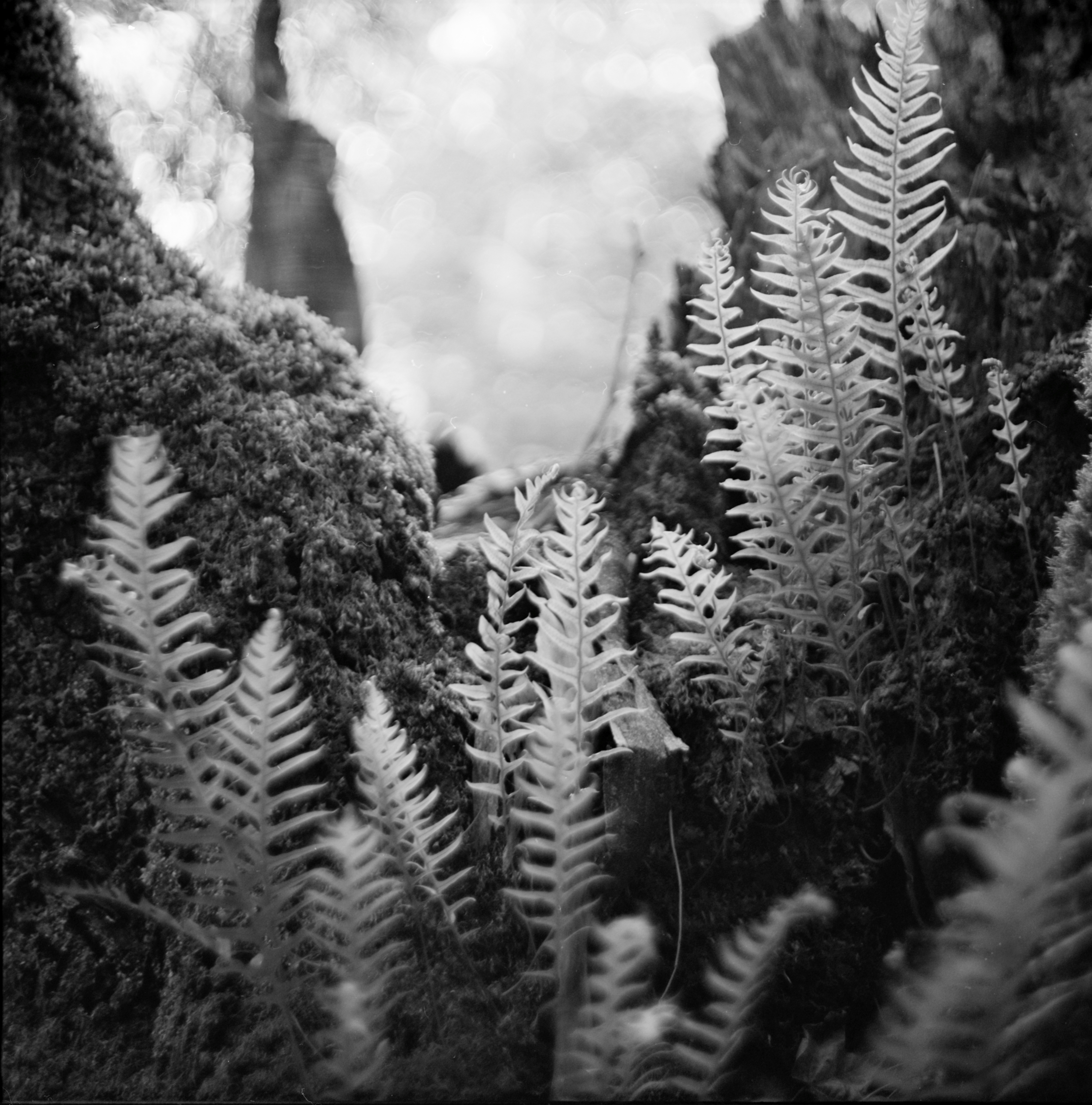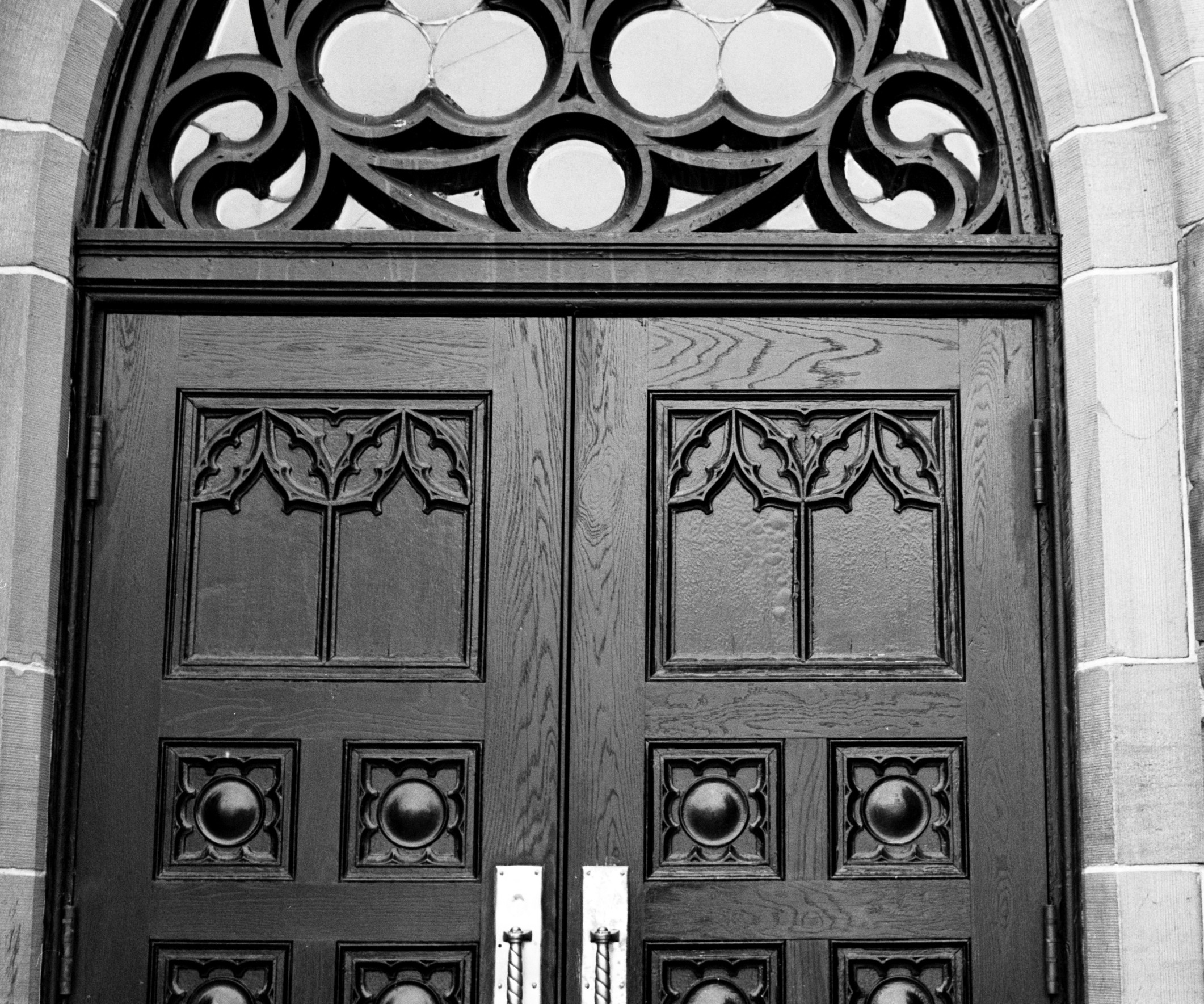
A photographic essay on thresholds, attention, and the slow art of seeing. Edition 1, 2026.
William Blake wrote: “If the doors of perception were cleansed, everything would appear to man as it is — infinite.”
Aldous Huxley borrowed that line for his 1954 essay. Jim Morrison borrowed it from Huxley — and named a band after it.
I’ve been a fan of Morrison’s lyrics for as long as I can remember. The restlessness in them. The obsession with edges and thresholds, with what happens at the boundary between one state and another. When I started thinking about my next zine, the title came first: The Doors of Perception. Originally I imagined pairing his lyrics with my photographs — left page, words; right page, image.
But the concept evolved. Shifted. And somewhere in that process I realised: that’s exactly what the zine is about. Perception is not fixed. It moves if you let it.
What remained was the question Morrison himself was circling when he died — not just in music, but in the short experimental films he was already making, already planning to pursue. He was leaving The Doors to make cinema. We never got to see what that looked like.
I think about that sometimes. What his films would have been. Slow, probably. Obsessed with thresholds. Not about doors — but about crossing.
This zine is my version of that question.
Working Against the Current
I shoot medium format film. That simple fact shapes everything about how I work and how I see.
When you load 120 film and walk out the door, you make choices differently. There is no spray-and-pray. There is no instant review, no delete key, no “I’ll fix it in post.” There is the scene, the light, the moment — and a decision. You commit.
This is not nostalgia for the analogue age. It is a deliberate method. Slowing down forces attention. Attention changes what you notice. And what you notice — really notice — turns out to be everywhere.
In a world built around frictionless capture and infinite scroll, shooting on film is a form of resistance. A digital detox that isn’t about switching off, but about switching on — more carefully, more intentionally. One frame at a time.
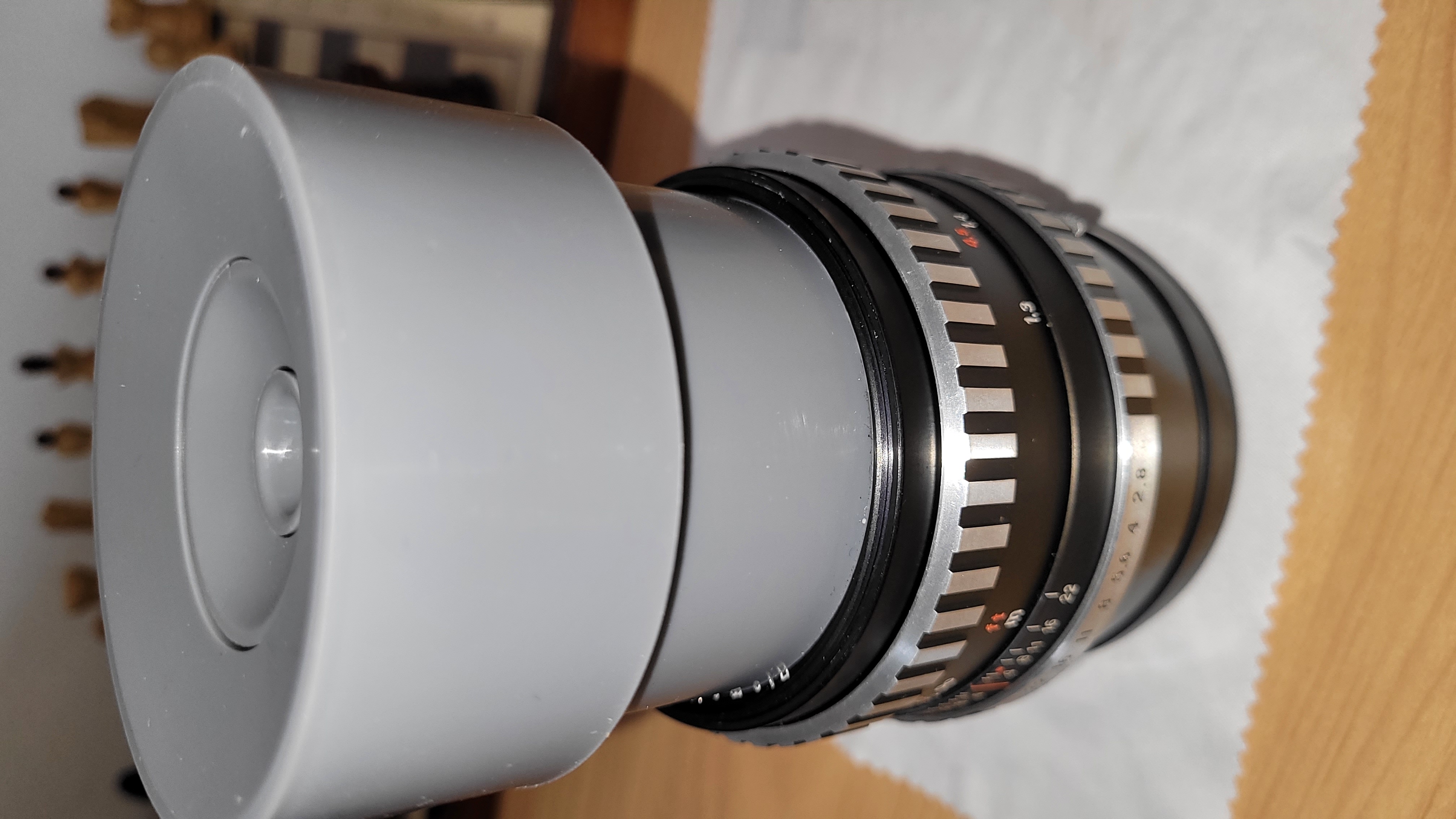
For this project: the Pentacon Six TL with Carl Zeiss Jena Biometar lenses in 80mm and 120mm, and the Zeiss Ikon Ikonta 521/2 — its Tessar, the eagle’s eye. Ilford XP2 Super 400 as my go-to stock, some FP4 Plus 125 where conditions called for it. Yellow filter, red filter, a CPL filter where the shot called for it, an old Velbon Traveller tripod on the slower shots. Nothing exotic. All deliberate.
The CPL deserves a note. One image in the FRAMES movement was shot through a window using a circular polarising filter to cut the reflection — but not entirely. Dialling it back partially let the camera reflect faintly in the glass. The photographer visible in the frame, looking out. That ambiguity was the point.
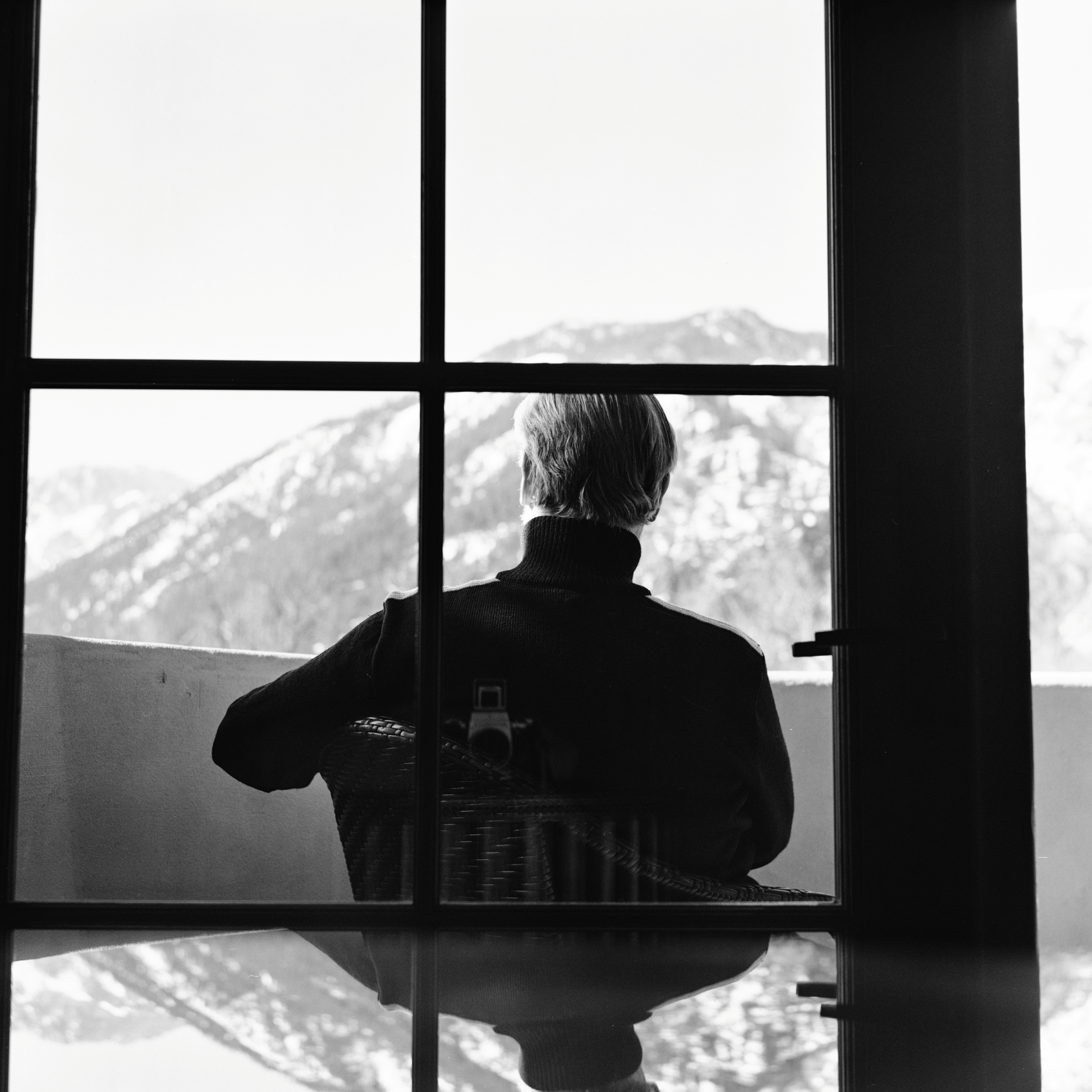
The window as frame. The photographer as subject. FRAMES movement — Pentacon Six TL, Carl Zeiss Biometar f2.8/80mm with CPL filter
This Zine Is Not About Doors
The Doors of Perception (Edition 1, 2026) is a photographic essay about thresholds — moments where a place changes through light, structure, and attention. Doors appear throughout, but they are not the subject. They are a metaphor.
The zine is structured in five movements:
THRESHOLDS — The literal beginning: doors, gates, steps, entrances. Physical spaces that ask you to decide whether to approach. Here the work establishes its ground: the edge between one state and another.
FRAMES — The door becomes a frame. Windows, reflections, architectural openings. This is where the work pivots from place to seeing. The viewer becomes aware that they are not just looking at a space — they are looking at how a space is seen.
PASSAGE — Transitional space: edges, water, corridors, stairways, distance. Not all thresholds have hinges. The door becomes movement, ascent, time itself.
AFTER — Ruin, closure, abandonment, quiet. What remains when passage is complete. Memory. Trace. Silence.
SEEING — The implicit fifth movement. The final gesture — a binocular image and a horizon — makes the thesis explicit: the last door is the act of looking itself.
Why a Zine?
A zine is not a portfolio. It is a contained conversation — a sequence with rhythm, pacing, and intent. Each image earns its place in relation to what comes before and after it. The edit is the work.
I chose print deliberately. Printed images change how we see them. They remove the distraction of the interface — no notification pulling your eye, no algorithm deciding what comes next. They ask for attention, and they reward it.
There is something important in that ask. We have built an entire visual culture around immediacy and volume. More images per second than at any point in human history. And yet the experience of actually looking — slowly, with full attention, long enough for something to shift — has become genuinely rare.
I didn’t return to analogue photography to produce content. I returned to slow down, to notice, to see again. Social platforms are built on a different logic — they reward speed, repetition, certainty. They nudge you toward optimisation, toward titles and thumbnails and cadence, and away from silence, ambiguity, and pause. None of that aligns naturally with how I work, or why I work. I’m not here to chase trends or increase output to satisfy an algorithm. I’m not here to turn a slow, reflective practice into a performance.
Printing the work is part of the same argument. A held print asks for something a scrolled image never does. For a photographer who works this way, printing isn’t optional — it’s where the work completes itself.
The Doors of Perception is an invitation to that kind of looking.
Perception Is a Choice
Every doorway, window, arch, or ruin in this zine is a threshold — between inside and outside, light and shadow, presence and memory. The locations vary widely. The way of seeing does not.
That, I think, is the point. The subject is almost secondary. What matters is the quality of attention brought to it. When you look long enough at anything — a rusted gate, a reflected window, the shadow of a staircase — it starts to give something back.
Pause. Look longer. Notice what is usually passed by.
Perception is not automatic. It is a choice.
I Still Haven't Found What I'm Looking For
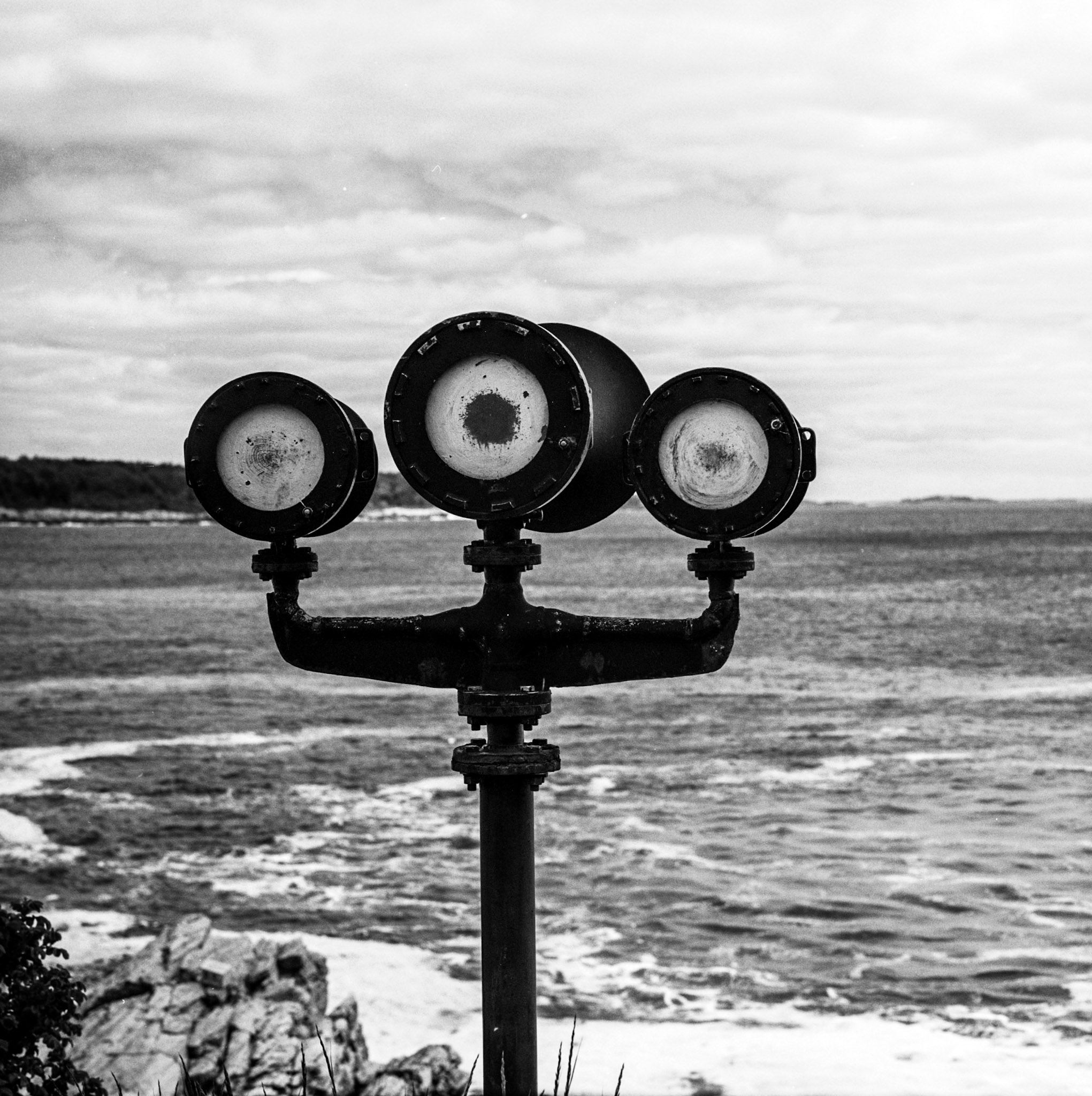
The last door is the act of looking itself. SEEING movement — Pentacon Six TL, Carl Zeiss Jena Biometar f2.8/120mm
Blake’s line was not about hallucination. It was about clearing away the habit of non-seeing. The idea that the world is already infinite — if you choose to look at it that way. The binoculars point outward. The sea offers no answer. But the looking itself is not nothing. It is, perhaps, everything.
If this resonates — the zine is available via Blurb, or in Books & Prints. Below a 15 pages preview.
Photographs by Henry. Pentacon Six TL and Zeiss Ikon Ikonta 521/2. Ilford XP2 Super 400 and FP4 Plus 125.
— Edition 1, 2026 — is available now at photography.myvortexcloud.com*
Photographs by Henry. Pentacon Six TL and Zeiss Ikon Ikonta 521/2. Ilford XP2 Super 400 and FP4 Plus 125.