Isn’t it strange how quickly time moves when you’re paying attention? March 2026. Five years into retirement. And somewhere along the way, the familiar paths near my front door became a photography project I didn’t plan — and couldn’t stop.
When I wrote about returning to analog photography, I didn’t anticipate the response. The comments, the reflections, the private messages from people who recognised something in the idea of slowing down. That surprised me. And it mattered. So thank you for following along.
In the months since, I went back. Same woods. Same creek. Same familiar trees. Not to repeat what I’d already made — but to look again, with time between me and the first look.
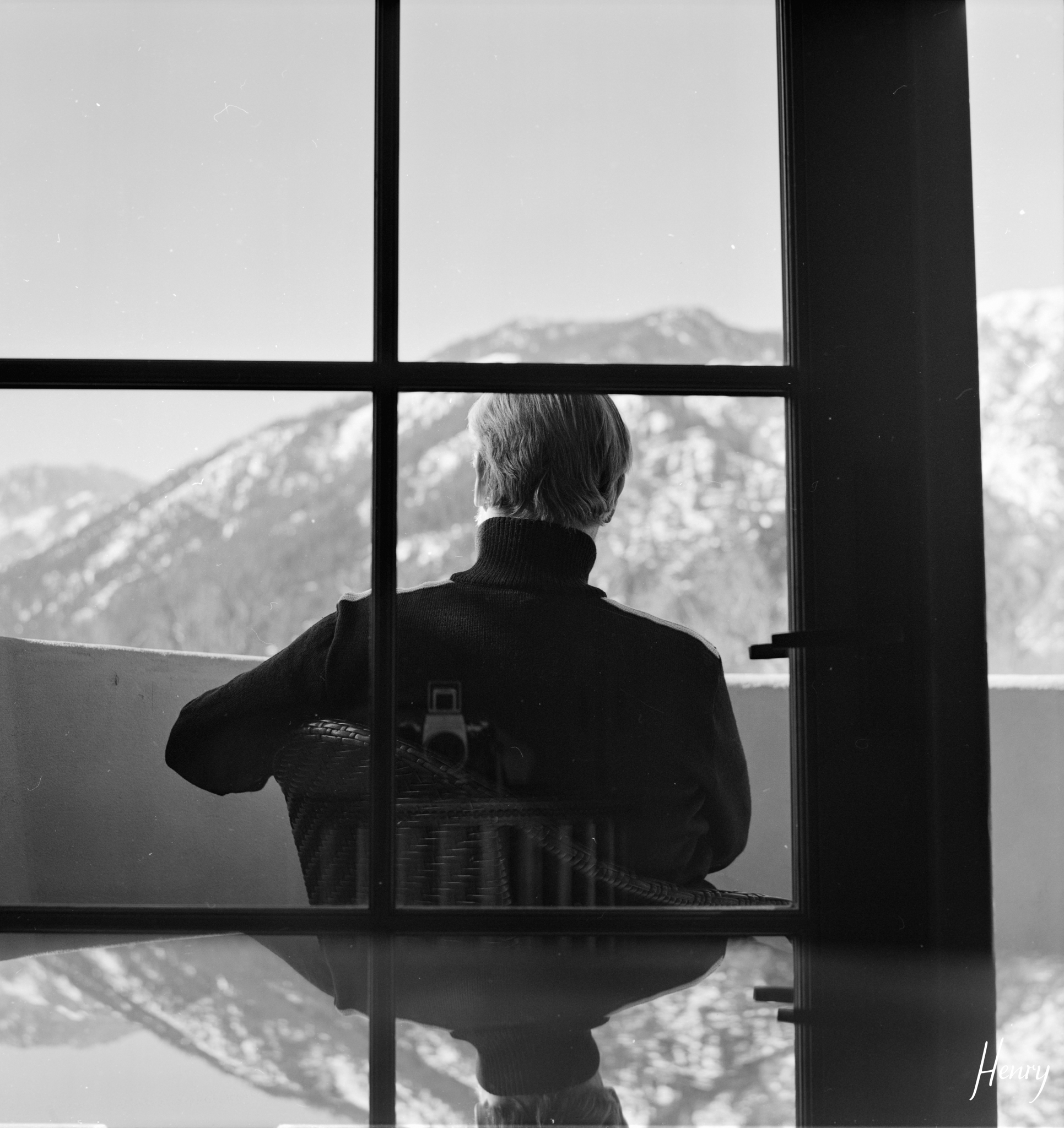
 © Henry — Self-portrait, Reflections in Stillness
The Local World, Revisited
From My Front Door is an ongoing body of black-and-white photographs made within a mile or two of home — Community Park, Juel Park, Bear Creek, Farrel-McWhirter Park. Places I walk or ride through regularly. The kind of places that become invisible with familiarity.
Over the past year I carried a camera in my backpack and my Velbon tripod through all of them. I’d stop at the creek. Sit for a while. Let the place settle before making a frame. And I noticed something: people stop when they see a camera on a tripod. They look. They ask questions. More than once someone said: “My dad had a camera like that.”
Mine did too. This slow return to photography keeps bringing him back — his Zeiss, the photographs he made, and the quiet fact that a life can be shorter than we expect. But that’s a different story, for a different post.
From Rediscovery to Depth
The first chapter of this project began as an experiment: relearning a 1938 Zeiss Ikon Ikonta 521/2. Eight frames per roll. Patience over automation. That phase was about rediscovery — proving to myself I could still do it, still see it.
The second chapter feels different. The places haven’t changed much. I have, I suppose. A second look isn’t about replication. It’s about depth — noticing what you missed or glossed over the first time around.
I believe a second look is not about replication. It is about depth — noticing what you missed the first time.
A Different Companion: The Pentacon Six TL
Along the way, I added another camera to the kit: the Pentacon Six TL. A medium-format SLR manufactured by VEB Pentacon in Dresden, fitted with lenses from Carl Zeiss Jena. Solid, deliberate, demanding full attention — built like a tank, occasionally behaving like a diva. It changes everything about how you work: your posture, your pace, the decisions you make before you press the shutter.
The square format reshapes how you frame. The waist-level viewfinder shifts the dynamic between photographer and subject in a way that a camera held to the eye simply doesn’t — people are more relaxed, more willing to be in the frame.
In my mid-twenties, I could only admire a system like this from a distance. Now I’ve built it slowly: a small set of lenses from Carl Zeiss Jena. This wasn’t a gear upgrade. It was a shift in rhythm.
Bear Creek on Film
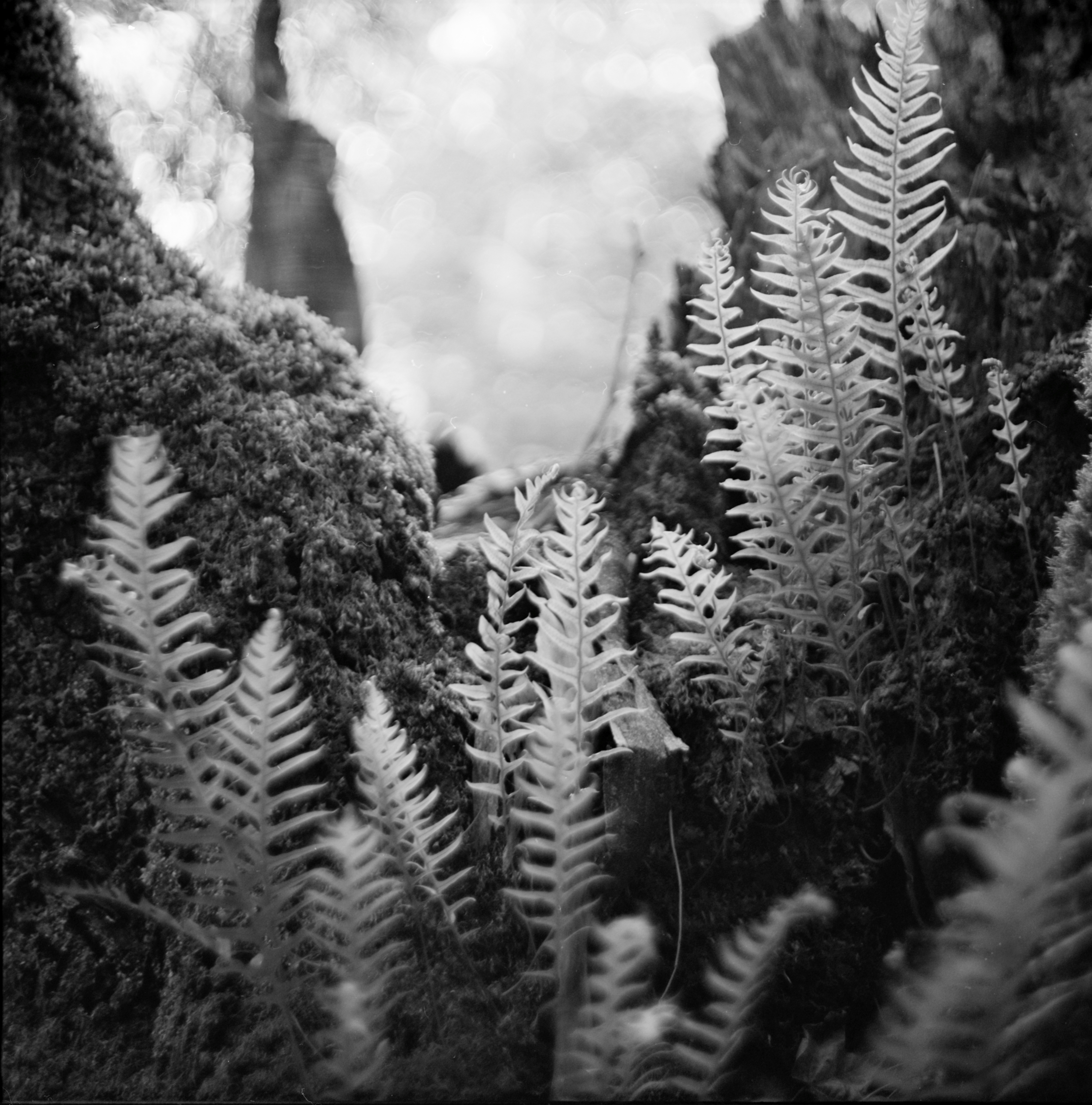
 © Henry 2025 — Pentacon Six TL, Biometar 120 on Ilford XP2 Super 400
Bear Creek is one mile from our home. I’ve crossed it so many times it should have faded into background. It hasn’t. I stop longer every time now — watching the water work around fallen branches and undercut banks. Not “pretty” in the postcard sense, but functional. Alive.
What I didn’t fully grasp at first is what the creek actually is: an active salmon corridor supporting Chinook, Coho, Sockeye, and Kokanee. Watching Coho and Chinook push upstream to the spawning grounds changes the way you see the water. It stops being scenery and becomes a system.
That’s when the project stopped being only about photography.
Working with film in a living habitat changes your behaviour. With eight frames on the Ikonta, or twelve on the Pentacon Six, you don’t shoot to collect. You shoot to decide. You start paying attention not only to light, but to flow, structure, season. Details that a motor drive and a 64GB card would let you ignore.
Those regular visits eventually became a short film: Bear Creek on Film — a few moments of creek footage woven together with black-and-white frames from the Ikonta (6×9) and the Pentacon Six TL (6×6). It’s not a slideshow. It’s a field note.
The Zine: What It Actually Is
From My Front Door — Second Look is a deliberately sequenced selection from the larger project. A zine built from fine art photographs that belong together as a set — not a best-of collection, but a composed sequence.
The geography is modest. The repetition is intentional. The point isn’t novelty. The point is what familiar places reveal when you return with time between visits.
The zine moves through five chapters:
- Community Park — a short opening sequence: time made visible
- Juel Park — a historic farmstead: restoration beside ongoing decay
- Bear Creek — water and seasonal change inside an active salmon corridor
- Mackey Creek (Farrel-McWhirter Park) — flow, undergrowth, texture
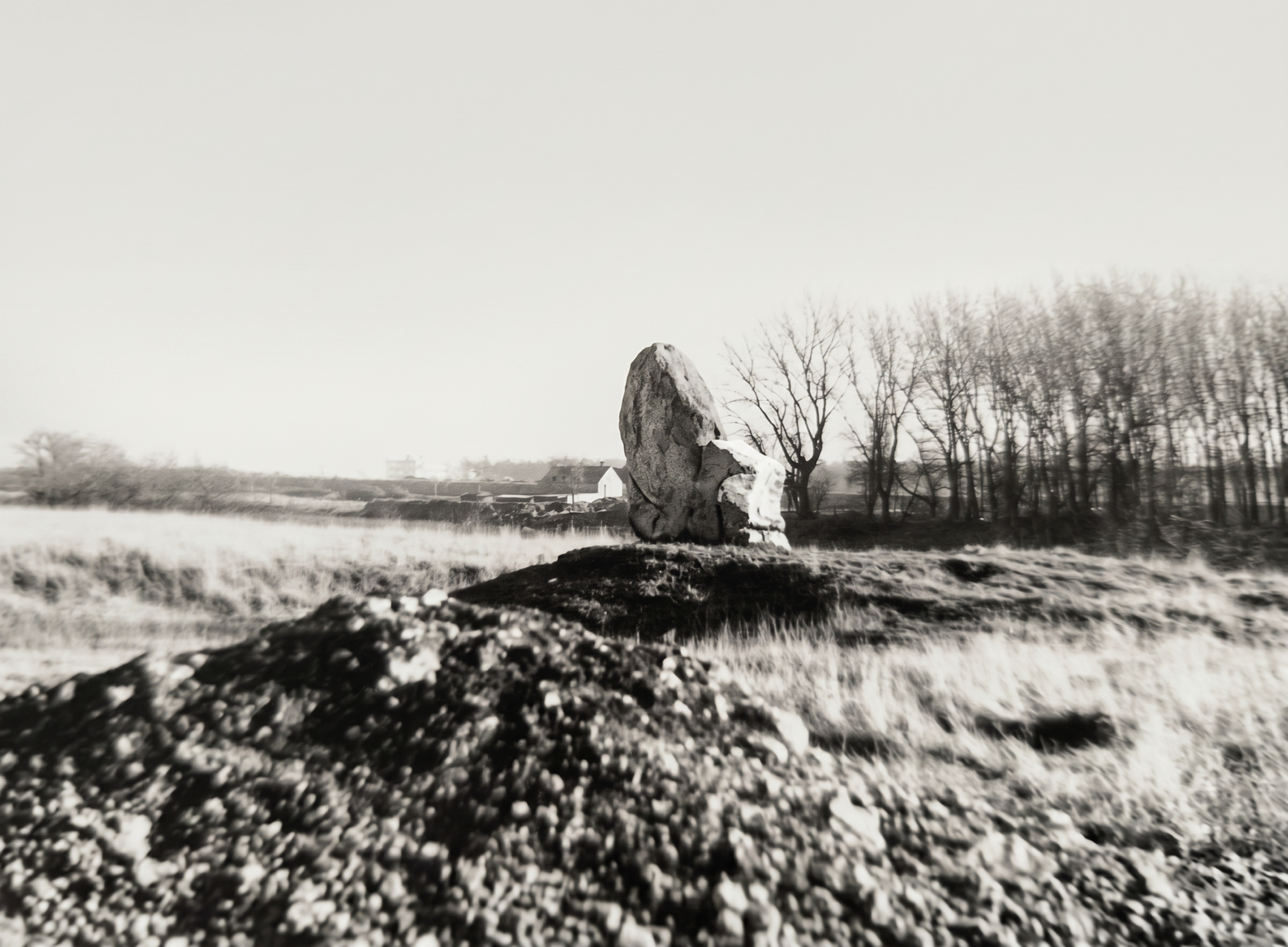
- Lost Places (Redmond area) — transitional farmstead structures, photographed with restraint
Inside the Lost Places thread, there’s a small human moment worth mentioning. I asked permission to photograph one of the farmstead properties and ended up in a long conversation with a great-granddaughter of the DeJong family — Dutch immigrants. The first farmstead her great-grandfather built with his own hands, now overgrown with noxious weeds, a shed still holding a few old farm tools. A story that a quick photograph from the road would never surface.
For the broader Lost Places work I limited myself to the Ikonta 521/2 — 6×9 format, eight frames per roll. That constraint matters. It forces decisions instead of coverage, and the large negative gives these structures the weight and clarity they deserve. Fewer frames. More commitment. Stronger edits.
What a Second Look Reveals
We tend to assume progress means moving outward — new places, new subjects, new momentum. But sometimes progress means returning. Standing in the same place. Looking longer. Allowing time to accumulate in the frame rather than around it.
This second look isn’t a sequel. It’s evidence that attention compounds.
In a world that moves too fast, I chose to slow down. One frame at a time.
The Zine — Browse the preview:
Go deeper:
— Henry Schroeer
I publish my photography under my middle name Henry — a small tribute to my father Heinrich, and his lifelong love of making photographs.