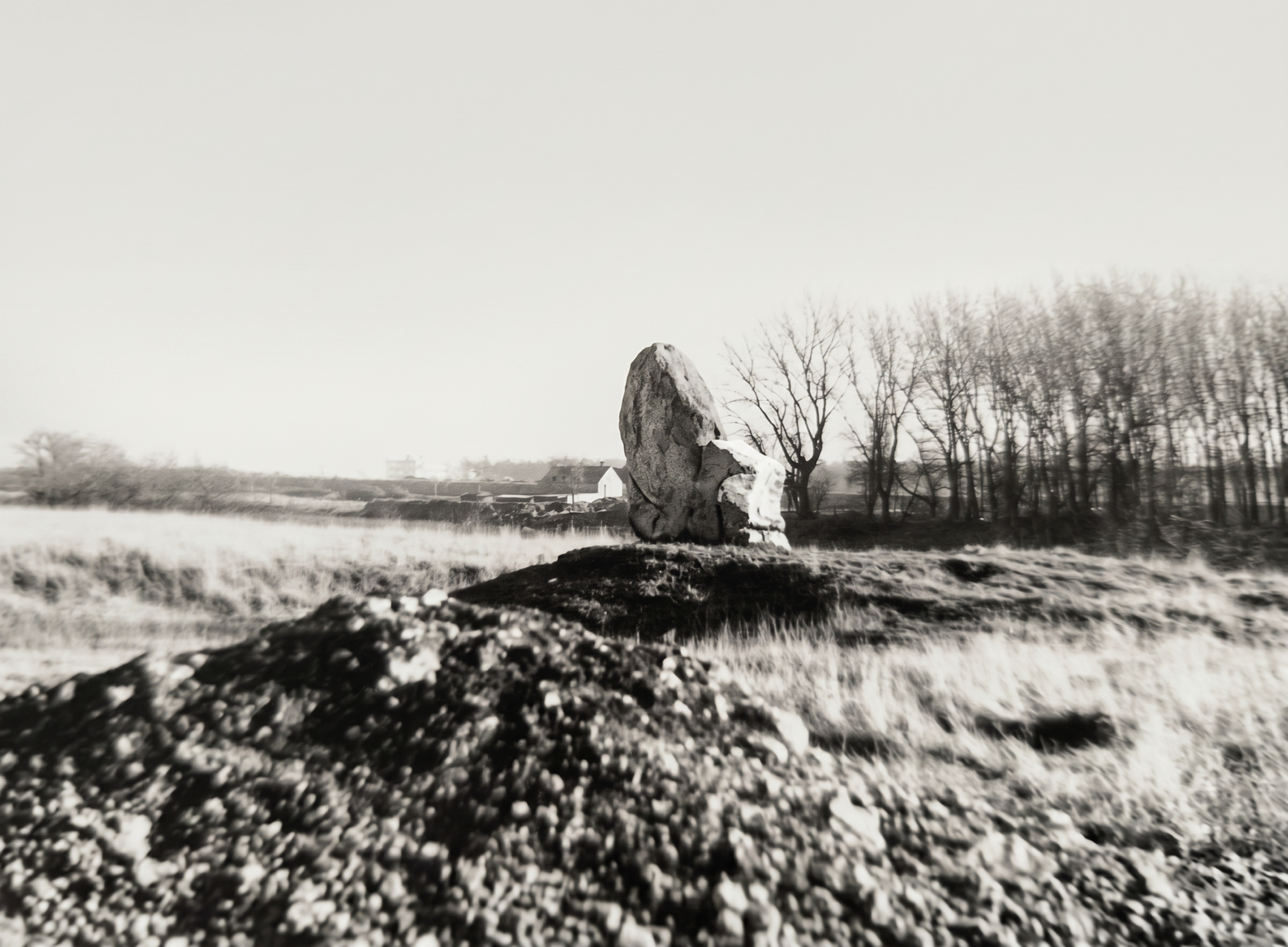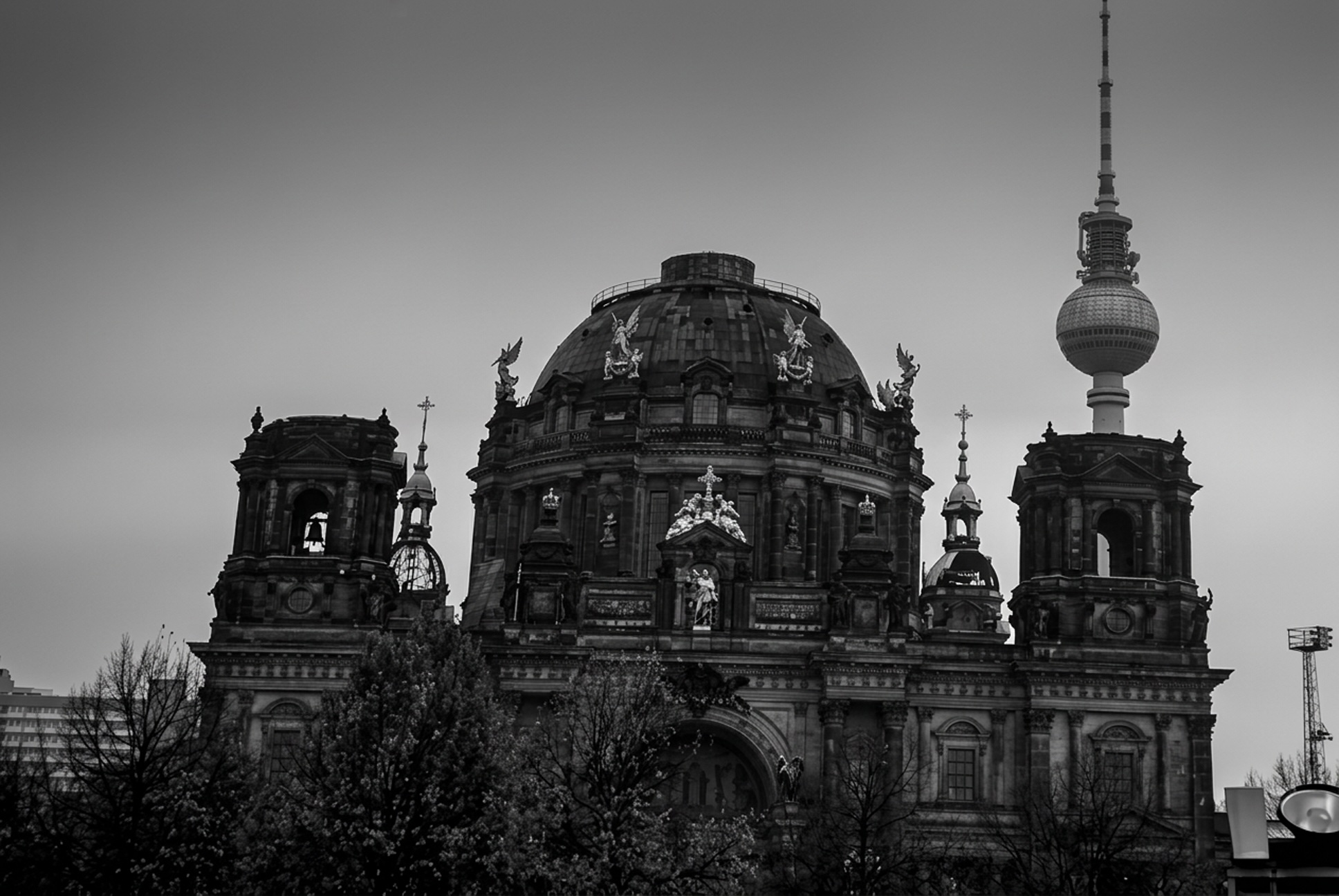
On authorship, presence, and the difference between making a picture and ordering one.
I shoot film. You know that by now if you’ve been around here a while. Medium format, mostly — the Pentacon Six, the old Ikonta my father might have recognized. Twelve frames on a roll, eight on the Ikonta. No delete key. No undo. No burst mode. You load the film, you stand somewhere, you decide, you compose, you press the shutter — and the light either lands on the negative or it doesn’t. The story the photograph tells is yours, because you composed it. It might work, it might not. But whatever happens is yours. There’s no one else in that moment — just me, the camera, and what I chose to point it at. Every photo has a story, and this one is mine.
I’ve been thinking about that lately, because the question of who made a thing has gotten strangely complicated.

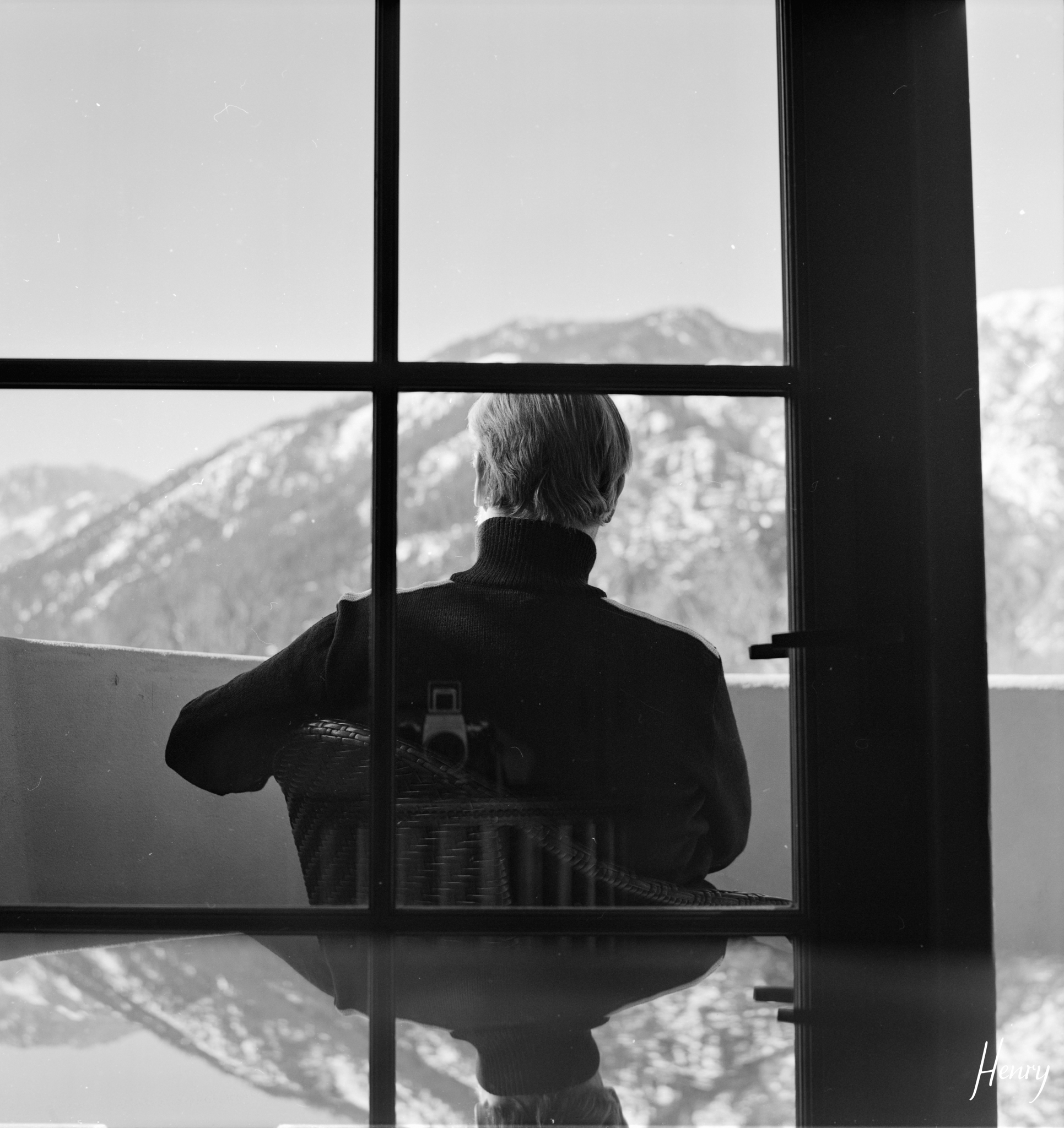
The Observer and the Observed — Pentacon Six TL, Carl Zeiss Jena Biometar f2.8/80mm, Ilford XP2 Super 400
Here’s what set me off. A chess software company — I’ll leave the name out, the point isn’t them specifically — has been flooding my feed. Chess is one of my other loves, so the algorithm finds me. And the posts all run on the same engine: a moody, cinematic image, a slogan about greatness, a link to download.
First it was Who is the chess GOAT? — four legends across a board. Fischer, Capablanca, Carlsen, Kasparov, glowering at each other in dramatic light. Except Capablanca died in 1942, and the image is not a photograph of him, because there is no photograph of Capablanca that could exist like that. It’s a generated face that sort of looks like him, at a board where the back-rank pieces melt into each other and the clock has no real numbers on it. Look closely and the whole thing comes apart in your hands.
Then came the next one, and this is the one that really stopped me. A line across the top: while everybody is hyped on AI, we are hyped on humans. Building the future of human chess improvement. Underneath, an ad — a grandmaster title versus a luxury watch. What’s earned versus what’s bought. “10,000+ hours of practice. Years of discipline. A lifetime of sacrifice. Earned — not bought.” A whole sermon on the dignity of effort, of showing up, of time actually put in.
And the image carrying that sermon — the brooding player at the board, the watch, all of it — is AI-generated. The watch dial is confident gibberish. The pieces melt the way they always do. No man sat at that table. No photograph was taken.
So they wrote we are hyped on humans over a picture with no human in it. They preached earned, not bought — and the picture was bought instantly, generated in seconds, the exact opposite of the thing they were selling. The slogan condemns the method. Their own words are the evidence against them.
I said something on LinkedIn — measured, the way you’d write anything you put your name to, and yes, a bit ironic. Guilty. Not sure why I’m doing this; I could have said nothing and just unfollowed. Anyway.
They didn’t answer the irony, and they didn’t come back with a better argument than the one I’d made. They just stirred the pot and pushed back. Then they ran my latest article through an AI-detection tool and used the score to wave it off. My article — the considered, edited thing I publish under my own name — flagged as machine-written, 75% of it, and that was apparently reason enough not to engage with what it said.
Sit with that for a moment. A company posting generated images under a banner that says we are hyped on humans responded to a human’s writing by accusing it of not being human. The move was look at this other guy, not us — look what he’s done. The charge they reached for was the precise thing wrong with their own output. They didn’t argue back. They questioned whether a person had written it — instead of answering the person.
That’s the loop I keep running into, and it has two halves I want to keep separate, because they’re different problems even though they rhyme.
The first half is theft. (I’m using the word loosely — the lawyers are still arguing the precise one.) Copyrighted work gets pulled into these models without anyone asking. A novelist and former colleague I follow gets cold pitches that quote details from his book no one should know unless they read it — and he never sold it to anyone. Photographers watch their archives get scraped to train the thing that will eventually replace the commission. Whether or not a court ends up calling it infringement, something was taken, and the person who made it was not in the room.
And here’s the part that makes it different from every kind of taking that came before: you can’t get it back, because there’s no it anymore. When someone steals a photograph the old way — runs it in an ad, posts it without a name — you can at least find it. Point at it. Demand the credit or the fee. But a photograph pulled into a training set stops being a photograph. It dissolves into the model — untraceable, unattributable, gone as an individual thing. Nobody can tell you whether your work is in there. Not even the people who built it. There’s no registry, no negative file, no contact sheet to check against. It’s as if someone melted your negatives down and poured them into their own emulsion. The picture you stood somewhere to make is now an ingredient — and ingredients don’t have names.
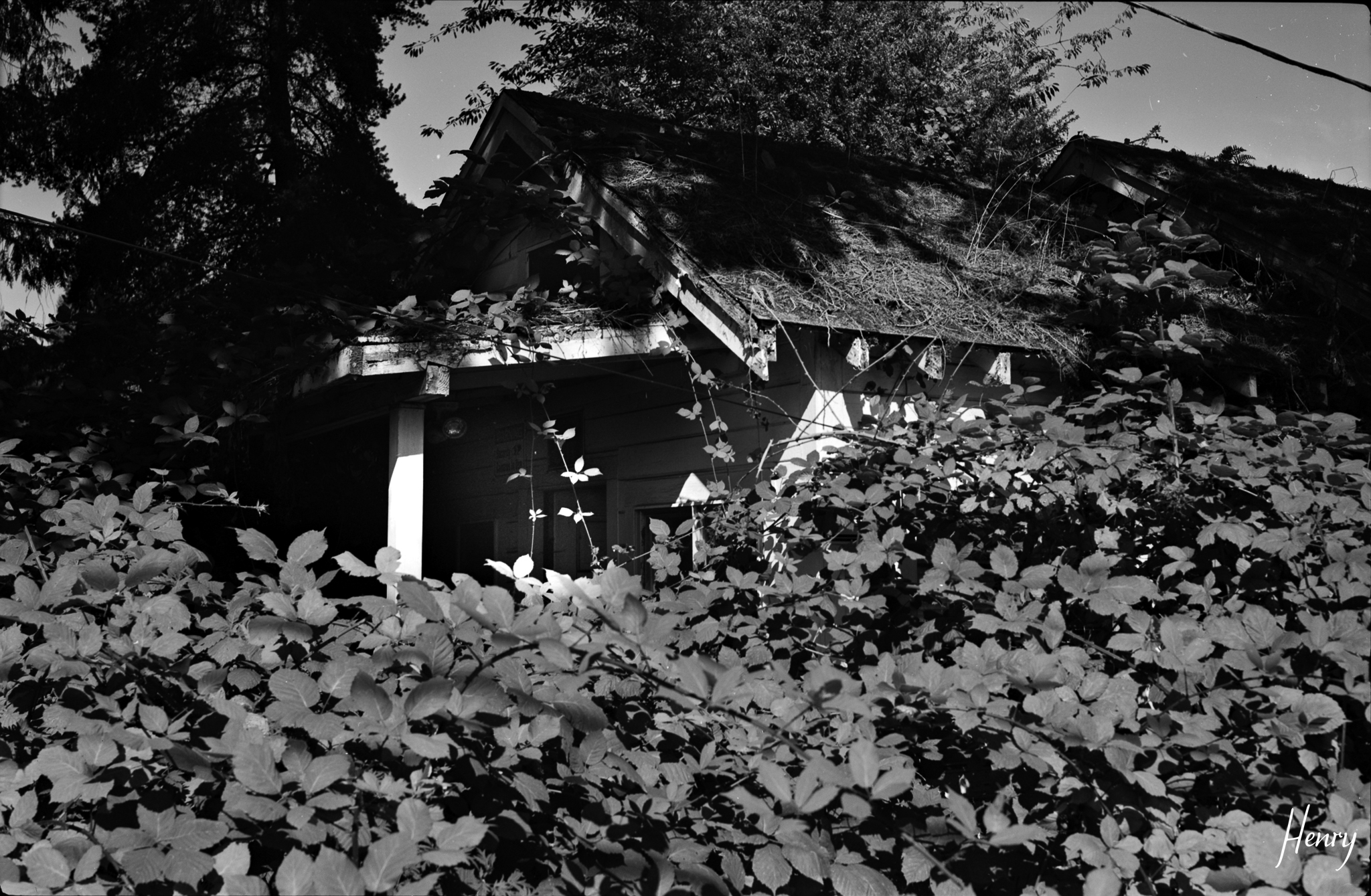
Fading Echoes — Lost Places in Monochrome. Zeiss Ikon Ikonta 521/2, Tessar 10.5cm f/4.5, Ilford XP2 Super 400
I’m not the first photographer in my circle to chew on this. My YouTube friend Natalie Rosella Boonzaier wrote a long, careful essay arguing that AI imagery isn’t art — and the line of hers I keep coming back to is the cleanest version of the whole problem. When someone types a prompt, she said, the AI is the one commissioned to make the picture. The human is the commissioner — not the artist. A patron, not a painter. You can want a thing, describe a thing, pay for a thing, and still not be the one who made it. That’s the entire argument in four words: commissioner, not artist.
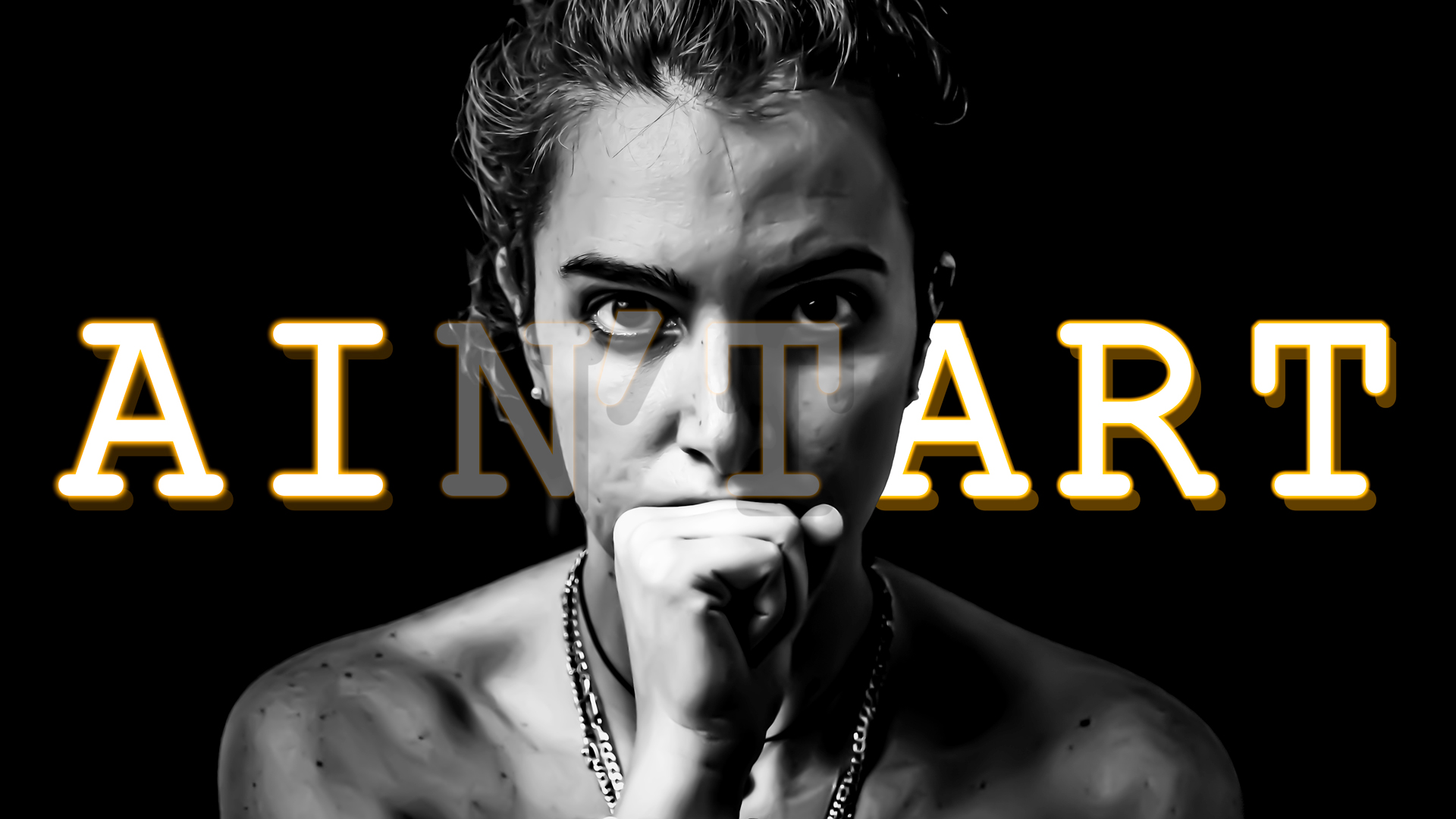
Title image from Natalie Rosella Boonzaier's essay “AI-Generated Imagery Is Art — An Argument Against”.
She also made a prediction I think about often — that the more we’re buried under this frictionless, sterile output, the more people will start craving the authentic human work underneath it. The genuine expression. The thing someone actually stood there and made. I hope she’s right. Some days the feed makes it hard to believe.
The second half of the loop is stranger, and newer. The rest of us — the ones still making things by hand — are now getting accused of being the machines.
That “75% AI” score I mentioned? Maybe you’ve gotten one too. And here’s what should bother everyone: it happens even if all you used was Grammarly, or Copilot built into Microsoft 365. Those tools sit inside millions of professional workflows — they’re switched on by default in the software most people write in every day. There’s something else, too, and it’s personal. I’m bilingual — well, and a bit of a third language. English is not my mother tongue. I lean on these tools not just for typos, the way Word has always caught them, but for grammar — for the phrasing and structure that come naturally to a native speaker and don’t always come naturally to me. That help is what lets me write clearly in a language I came to second. Even after decades of writing in English, you never quite have that confidence. And the detector flags me for it. Read that back: a tool that punishes a non-native speaker for the very assistance that lets him take part. If leaning on a spellchecker, or a grammar aid, or Microsoft’s own assistant is enough to flag you as artificial, the detector isn’t measuring who wrote something. It’s measuring how polished it is. It has confused clear with fake. And the fix it pushes you toward is to write worse on purpose — to sprinkle in errors as proof of life.
I won’t do that. I’d rather be accused.
There’s an old story that settles this better than I can.
In 2011, a British wildlife photographer named David Slater spent days in Indonesia among a troop of crested macaques — befriending them, as he tells it, over his fourth year photographing the species. He set up the camera, chose the settings, framed the conditions. And one of the monkeys pressed the shutter and took a selfie. The image went round the world. Then the lawyers arrived. PETA sued on the monkey’s behalf, arguing the animal that physically pressed the button was the author and the owner.
The courts didn’t buy it. The Ninth Circuit threw it out — narrowly, on the grounds that the Copyright Act doesn’t let animals sue at all. But the deeper principle, the one the Copyright Office has held all along, is the one I care about: a work has to be made by a human to be authored at all. Pressing the shutter is not authorship. The monkey pressed the button. Slater chose the place, the gear, the light, the moment — Slater did the seeing. The authorship was never in the click.
I keep that story close, because it answers the obvious objection to everything I’ve said. Someone will tell me (and yes, has done already): you just press a button too. How is your film any different from typing a prompt? The monkey is the answer. The button has never been the point. A macaque can trip a shutter and produce a viral photograph and still not be the author of anything — because authorship lives in the deciding, the standing-there, the knowing what you’re looking at. Not in the mechanical trigger, and not in the typed instruction either.
And here’s the part that surprised me: the law has been quietly drawing this exact line for a very long time.
Go back to 1884. Photography was the new threatening machine then — a camera does the work, so how can there be an author? The Supreme Court took up Burrow-Giles v. Sarony and decided a photograph was authored, fully, by a human — because the person had posed the subject, arranged the light, chosen the moment. The camera was just the tool. The seeing was the authorship. A hundred and forty years ago, about my medium, the court said what I’ve been trying to say all along: the machine that captures the image is not the one that made the picture.
And then, this past March — weeks before I sat down to write this — the question came around again in a new costume. A man named Stephen Thaler had spent years trying to copyright an image his AI made entirely on its own, listing the machine as the author. The Copyright Office said no. The courts said no. And on the second of March, the Supreme Court declined to hear his appeal, which lets the lower ruling stand: under US law, a copyrightable work has to be authored by a human being. Not because anyone hates the technology — the same ruling leaves plenty of room for work where a person uses AI as a tool and makes the real creative decisions. The line falls exactly where you’d hope. Prompts alone, the Copyright Office said, are just instructions — they pass along an idea, and ideas were never the thing copyright protected. Standing somewhere and deciding is. The seeing is. Same as 1884. Same as the monkey. Same as a roll of film.
So here’s the ladder I keep coming back to. Three rungs, all the same question — who made this, and does it matter.
Top rung: I made it myself. The film work. I stood there. I knew what I was looking at. The decision was irreversible and it was mine. Authorship is total because presence was total.
Middle rung: I used someone else’s. When I need an image I didn’t shoot, I go to Unsplash, and I credit the photographer by name. Here’s what matters — Unsplash doesn’t require it. The license lets me use the photo with no attribution at all. I credit anyway, because someone made the thing, and their name belongs on it. That’s not following a rule. There’s no rule. It’s just how you treat other people’s work.
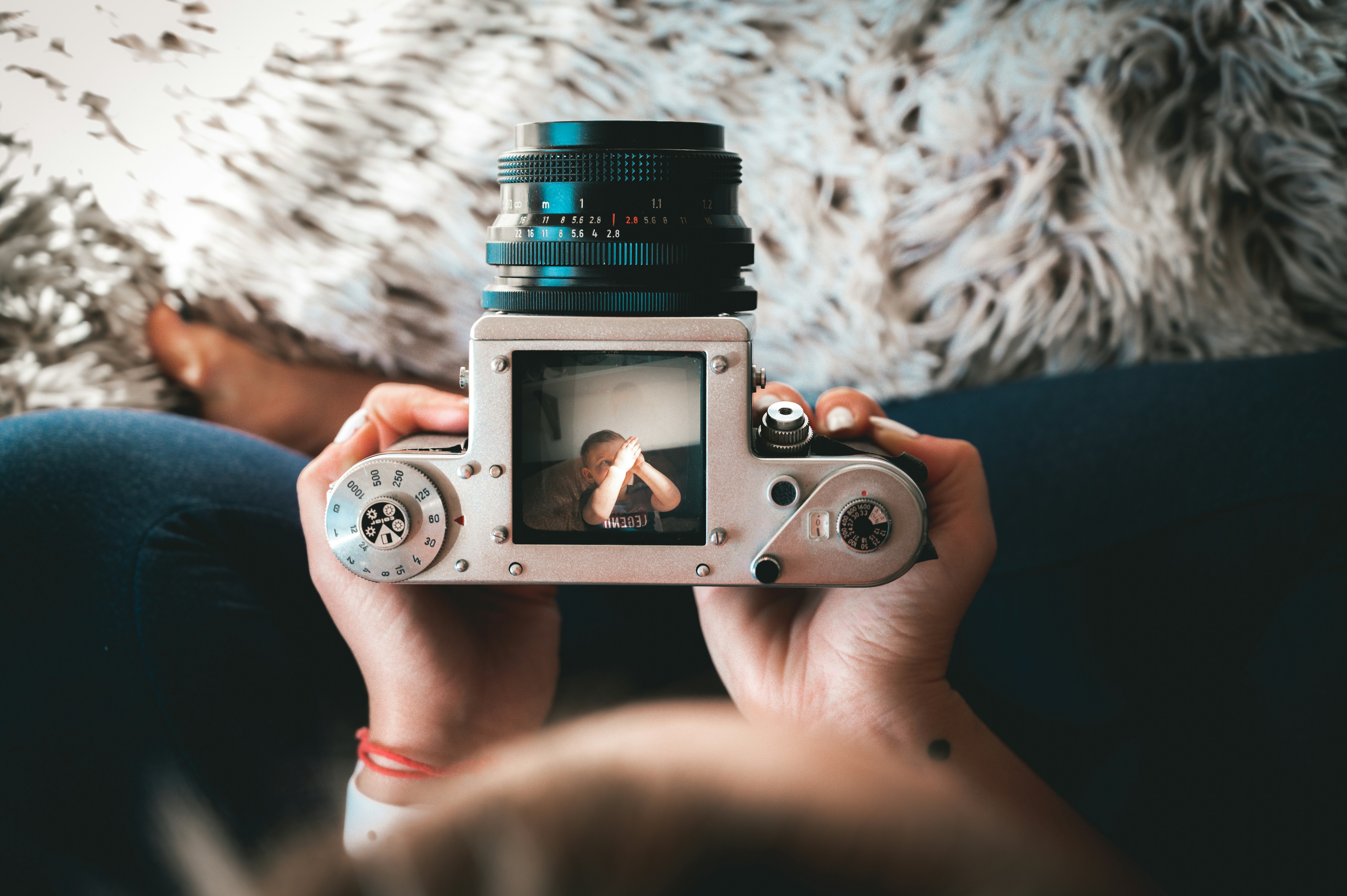
Photo by Jan Kopřiva on Unsplash — a Pentacon Six TL, the same camera I shoot.
Bottom rung: generated. No one stood anywhere. No one decided. A face was assembled from a thousand scraped images of strangers — including, somewhere in there, a dead world champion — and sold back to me as real and human, over a slogan about what can only be earned. Every one of those scraped images was a photograph someone stood somewhere to make. That’s where the bottom rung comes from: it’s the top rung, drained. The authorship isn’t shared or borrowed. It’s erased, then painted over with the language of the very thing it skipped.
And when they don’t generate the image, they do the other version of the same thing: take a real photograph, made by a real photographer at a real tournament, and build the ad on it without a name anywhere in sight. Erased, or uncredited — it’s the same disappearance. Someone made that picture. The whole machine runs on pretending no one did.
I’m not against the tools. Here’s how a piece like this actually starts: with a fountain pen, in a Leuchtturm notebook — the paper takes ink the way good paper should — the same pen I’ve written with for as long as I can remember. I write by hand first because it’s the same slowing down as the film. You can’t delete ink. You cross out, you keep going, you commit. It’s its own kind of digital detox — the thinking happens at the speed of the hand, not the cursor. Then I let an AI read my handwriting and sort the pages out. The seeing happened on paper; the machine just developed it. After that, I use the assistant to think out loud, to argue with me, to catch the places I’m being lazy or repeating myself. None of that is new to me, and none of it troubles me. In my professional life I worked with copywriters — really good ones. They’d debrief me, record the conversation, and shape the right flow around my words. Over multiple sessions we’d build the article together. Nobody ever doubted whose article it was. It was mine — my knowledge, my thoughts, my experience. The copywriter was a craftsman I handed something to, not the author of it.
That’s the honest frame for what an AI assistant is to me now. The words here are mine; the back-and-forth that sharpened them was not entirely. I’ll tell you that openly, because the whole point falls apart if I’m not honest about it — and because it proves the very thing I’m arguing. A skilled helper shaping your material doesn’t erase your authorship. It never has. What matters is that the knowledge, the thinking, the decisions were yours.
The line I care about isn’t did a machine touch this. It’s was anyone home when it was made. Did someone stand somewhere. Did someone decide. Did someone know what they were looking at and commit to it.
But presence, on its own, isn’t quite the whole of it either. You can be fully present and still make something that’s merely pretty. To me — and I think to the people who’ve ever called my photographs art — a photograph has to do more than look good. It has to say something. Pain, grief, joy, resilience, the particular silence of a place that’s been left behind. It has to speak. When I compose a frame, I already have the story in my head — that’s the thing I’m trying to say, and the framing is how I say it. I’m not describing an outcome and waiting to see what comes back. I’m deciding, in the moment, where to stand so the picture means what I need it to mean.
That’s a different act from typing a prompt, and the difference isn’t subtle. A prompt is a description handed off to be fulfilled — make me something that looks like grief. The machine depicts. It doesn’t mean. It has no story in its head, because it has no head, and nothing it has ever lost.
It’s also why a photographic essay can exist at all. A single frame can be a sentence; a sequence of them is an argument. The through-line isn’t inside any one image — it lives in the seeing that connects them, the same person carrying the same intention across thirty frames, deciding what each one has to say and where it has to fall. You can generate thirty pretty pictures in an afternoon. You cannot generate a thing that means something across all of them, because meaning of that kind isn’t a style to be matched. It’s a person, present, with something to say, saying it one frame at a time.
That’s the whole of it, really. Not nostalgia. Not resistance, even, though some days it feels like that. I keep loading film because I want there to be no question about who made the picture — and no question that it was made to say something.
It was me. I was there. And I had something I needed to tell you.
Every photo has a story. My photos have my story. One frame at a time.
© 2026 Henry
I publish my photography under my middle name Henry — a small tribute to my father Heinrich, and his lifelong love of making photographs.
-flickr.jpg)